Brian Wesbury is often referenced in my notes for insight not found elsewhere. This note is worth reading end-to-end and more than once just to capture the nuances of his insight.
“However, a rate hike later this month is far from a done deal or a slam dunk. We get two inflation reports later this week, on consumer and producer prices, and if those come in more benign than the consensus expects, that may give Chairman Warsh enough ammunition to keep rates steady.” https://www.ftportfolios.com/Commentary/EconomicResearch/2026/9/8/strong-jobs-report-raise-odds-of-rate-hike
T-Bills are currently priced 3.8%-3.9% depending on the trading day. They have tended to dictate Fed Funds Rates through the pricing of the Discounted T-Bill rate currently sitting at 3.75% with a prior pattern of the Fed following this series in lockstep keeping a rough 0.25% premium. Mid-range of the current Fed Funds rate is 3.63%. Recently this relationship has been closer. In theory, the T-Bill is the risk-free asset. In other words, it should trade at inflation levels providing no return above or below the rate of inflation. The machinations of the prior vs the current administration’s policies have had dramatic inflation swings. More recently the Iran conflict spiked crude oil over $120/BBL. The Fed and T-Bill rates have mostly remained steady awaiting the market’s signal but now a new element enters the picture with the unexpected strong employment numbers stirring rate increase rumblings. The concerns being expressed is the age-old dictate that an “expanding economy is inflationary”. The belief of this risk is baked into the near ~$20Tril of foreign capital entering the US to build manufacturing facilities to avoid tariffs with high labor demand.
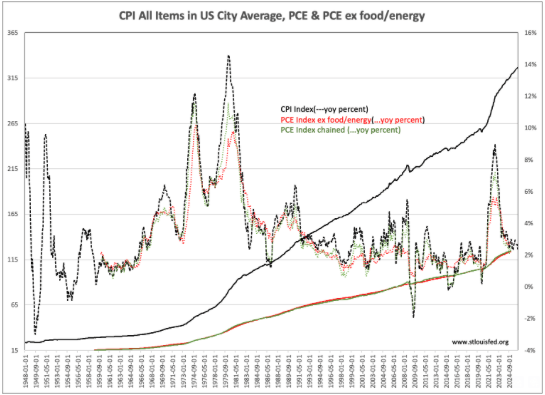
In my opinion, during the past 70yrs politicians have pushed expansion/inflation connection to skirt being questioned too heavily by those who saw government spending as the main cause of inflation; not production that was additive to the Private Economy in the form of Standards of Living improvements. The current Administration knows this difference in my opinion as does Fed Chair Warsh. This is where PCE Index ex food/energy matters. While the PCE Index chained is 3.3%, the ex food/energy index is 2.47%. Both are declining!
If the logic holds that the T-Bill should be risk/reward free, then we should see Fed Funds Rate fall ~1% from current levels. Inflation should continue to wane especially with the slowdown in government spending we have seen since Jan 2025. Wesbury provides good insight and is worth reading.